About Records of London's Livery Companies Online (ROLLCO).
Contents
Introduction
The Records of London's Livery Companies Online (ROLLCO) project has been established to create a fully searchable and freely accessible online database of membership information for the City of London's Livery Companies, from their earliest surviving records to c.1900.
The project began in 2008 with the creation of the ROLLCO database and the digitisation of The Clothworkers' Company extant Apprenticeship and Freedom records. In 2010, the records of The Drapers' Company and The Goldsmiths' Company were added to the database, followed by those of The Mercers' Company in 2012. In April 2014 the records of The Bowyers', Girdlers' and Salters' Companies were added, as were those of the Musicians' and Tallow Chandlers' Companies in July 2014. These updates brought the number of records of apprenticeship bindings to 87,705, the number of freedom admissions to 56,384, and the number of records of named individuals to 366,275. The records of further Companies will be released in a future update.
Generous funding from participating Livery Companies has made possible the digitisation of the records as well as the development of the website and API.
Historical Context
The Freedom
The Livery Companies of the City of London originate from the medieval trade guilds which were established to regulate particular crafts. Guilds supervised the training of apprentices, controlled standards of craftsmanship, and protected craftsmen from unfair competition. They also provided financial support to their members in old age and in times of poverty and bereavement. Up until the nineteenth century, Freedom of the City of London (or Citizenship) and the right to exercise one's trade there could only be obtained through membership of a Livery Company.
There were a variety of routes for someone to become a member of a Livery Company, or to be admitted to the ‘Freedom', as it is known. Chief amongst these were Servitude, by which a person gained the Freedom after serving an apprenticeship; Patrimony, by which the children of Freemen qualified for membership through their parents; and Redemption whereby the Freedom was obtained through the paying of a fine (often quite substantial).
Over time many Companies' direct involvement with their original craft declined, but membership has continued to be important. Today, Freedom of a Livery Company confers few tangible benefits; however, members continue to take pride in the history and traditions of their Companies and many present day Company families have generations' long connections with their Company.
Apprenticeship
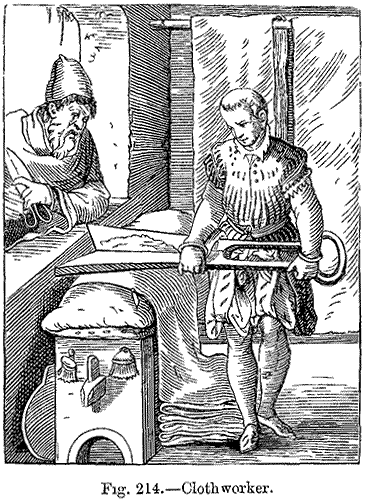
The institution of apprenticeship has a long history, one which has been central to the development of London as a major economic power. The earliest apprenticeships in the City date from the thirteenth century, with the practice of masters taking apprentices being regulated by the City's Courts of Aldermen and Common Council in conjunction with the Livery Companies from the very beginning. A number of Companies (such as the Fishmongers', Loriners' and Cordwainers', for example) established ordinances with the assent of the Mayor which detailed the particular rights and obligations pertaining to masters and apprentices. The City ordained that the Companies had to keep registers of their members, and although the minimum term of apprenticeship was officially seven years, it has been estimated that a quarter of apprentices served longer terms (up to over a dozen years in some cases) in the first decade of the fourteenth century.
By the sixteenth century apprenticeship had become the principal method of acquiring citizenship in London, with over 90% of admissions to the Freedom taking this route in the early 1550s, for example. Interestingly, and unlike later periods, the majority of apprentices in this period were not the sons of Londoners, but were the sons of gentry, yeomen and husbandmen from elsewhere in the country.
In 1516 a list drawn up by the Corporation to manage disputes in the processional precedence of the Livery Companies during civic ceremonies identifies forty-eight 'misteries' or 'crafts', each regulating an aspect of the economic and industrial life of the City. The formation of these Companies in many cases embodied several centuries of development and definition, reflecting the merging and splintering of associated trades and craft activities. Even by the sixteenth century, though, membership of a Livery Company did not necessarily signify that an individual followed the actual trade of that Company, even for those who had served a term of apprenticeship (although these individuals were more likely to follow the trade). As the data in the Records of London's Livery Companies Online project show, many freemen in a Company pursued a business or profession entirely beyond the sphere of the activities regulated by their Company.
The Database
The records of membership held by the Livery Companies constitute a richly detailed resource which can be used in wide range of historical and genealogical research, from the identification of networks of individuals through to an analysis of a variety of broad social and economic trends. When taken together, data drawn from a number of Companies provide the opportunity to look at patterns about living and working in London beyond a single trade or profession. Questions about the size and popularity of Companies, about where and what kind of backgrounds apprentices came from, about the costs and regulation of Company membership, and so on, can all be addressed through the data gathered by the ROLLCO project.
Data from a number of Livery Companies' freedom and apprenticeship registers have been entered into a database by a team of data inputters, and in other cases transcribed data have been donated to the project by volunteer researchers. For all Companies, in order to maintain the integrity of the sources, records were entered into the database in exactly the form that they appeared in the manuscripts - even in cases where abbreviations had been used, or where it was suspected that a mistake had been made by the clerks, or where incidental additional information was recorded.
The information gathered from the Companies' sources was the same in each case, the difference in sources notwithstanding (see The Sources below). The types of information recorded in the database include:
- Volume/archival information - including period covered and archival references
- 'Event' information about the individual apprenticeship binding or admission to the Freedom - including folio reference, dates and any additional information supplied by the clerk
- Specific information about the apprenticeship - including the length and value of the apprenticeship bond, the payments of any premium, the start date of the apprenticeship, any turnover information
- Specific information about the admission to the Freedom - including the method of admission and any associated payments
- Personal information - including names (where the original orthography has been preserved), gender, occupation, residential location (including county), the role that the individual played in a particular apprenticeship or Freedom, and their social and economic status
All dates in the database have been recorded as they appear in the source, with a standardised and where appropriate modernised version to aid chronological searching.
The Sources
The Bowyers' Company
Period covered by the ROLLCO records: 1680-1900
The membership records of The Bowyers' Company have been drawn from a number of sources. The records of apprenticeships from the late seventeenth century have been obtained from the data compiled and provided by Dr Cliff Webb, which have been published under the title London Livery Company Apprenticeship Registers, Vol 3 Bowyers Company 1680-1806, Fletchers' Company 1739-54, 1767-1808, LongbowStringmakers' Company 1604-68, 1709, 1714-17 (1996), which is available in the Guildhall Library Printed Books Section and Manuscripts Section reading room. The records of later apprenticeships, as well as Freedom admissions across the period, have been compiled and provided by Simon Leach from a number of registers held at Guildhall Library: Freedom Admissions 1724-1761 (GLMS 5353); Freedom Stamp Book 1760-1958 (GLMS 5354), Apprentices register 1788-1900 (GLMS 5349, 5350, 5355, GLMS 5369).
The Clothworkers' Company
Period covered by the ROLLCO records: 1545-1900
Registers of Freemen, 1545-1727
These registers record the date of the admission to the Freedom, the name of the new Freeman as well as those of his father and/or Master/Mistress' name. It is believed that these registers are indexes to more detailed registers that no longer survive.
Registers of Freemen, 1727-1900
These registers are more detailed than those from the earlier period, and typically record the new Freeman's occupation and address. Freedoms by servitude may also give the occupation and address of the Master and/or Mistress, whereas Freedoms by patrimony often record the name and date of the Freedom of the father. Details of 'tests' (witnesses) to the Freedom may also be provided. In the later nineteenth century, dates of birth are occasionally given.
Registers of Apprentices, 1606-1908
Apprenticeship records typically record the name of the new apprentice, the name, place of origin and occupation or status of the father, the name of the Master or Mistress, the date of the apprenticeship and the length of the term. The payment of bonds and premiums may also be recorded. From the 1640s, the Company's registers become more detailed and often give the occupation and address of the Master or Mistress. Records for the period 1606-1641 exist in Latin only.
The Drapers' Company
Period covered by the ROLLCO records: c.1400-1900
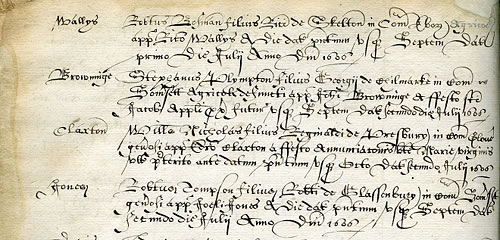
The source used for data entry of The Drapers' Company membership information is known as 'Boyd's Roll', a holograph calendar of manuscript sources created by P. Boyd in the 1930s. It covers the Company records from the thirteenth century to 1934, and provides biographical information about Drapers' members, and indeed often detailed accounts of their careers, organised in alphabetical order. Much of this information is in note form, and Boyd used his own system of abbreviations and codes. Only information directly relating to an individual's apprenticeship or admission to the Freedom has been entered into the database.
Boyd's Roll is available in the Guildhall Library Printed Books Section, as P. Boyd, Roll of the Drapers' Company, 1934.
The Founders' Company
Period covered by the ROLLCO records: 1643-1900
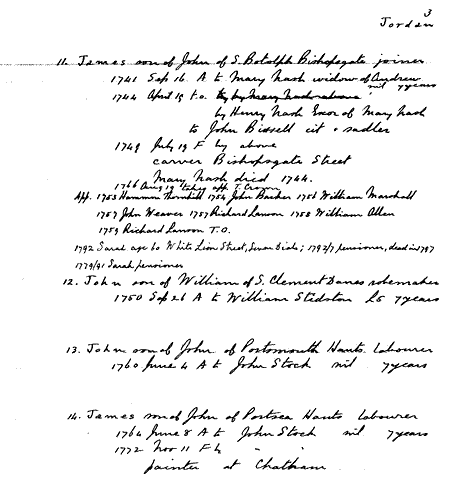
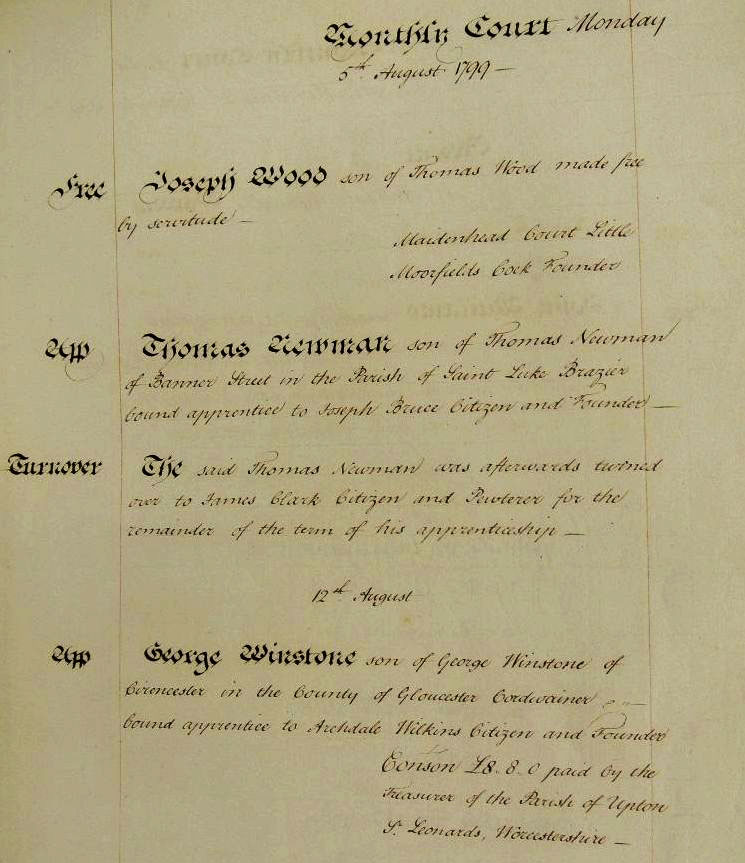
The sources used to recover the apprenticeship bindings and Freedom admissions for The Founders’ Company were drawn primarily from the extensive archive held at the Guildhall Library. Apprenticeships from 1643 to 1779 were collated from Apprentice Binding books GLMS 6340/1-3, with later bindings extracted from detailed volumes of court minutes. Freedom admissions from 1767 to 1860 were drawn from the same volumes of minutes, GLMS 6331/4-9. Freedoms for the period 1860-1900 were drawn from the published register of Company Members, Mavis Newton ed. Founders’ Company: Extract of Liverymen Taken from the Roll 1799-1986, (Founders’ Company, 2002).
The Girdlers' Company
Period covered by the ROLLCO records: 1654-1900
Membership records for The Girdlers' Company were entered into the ROLLCO database from apprenticeship and freedom registers held at the Guildhall Library. Freedom admissions were extracted from GLMS 5800/1 and 5800/2; apprenticeship bindings were taken from GLMS 5801 and 5802. In addition cross-checking was performed using The Girdlers' Company accounts recorded in GLMS 5814/A/1.
The Goldsmiths' Company
Period covered by the ROLLCO records: 1600-1708
The sources used to obtain information on the membership of The Goldsmiths' Company include Apprenticeship Registers, Court Books and a biographical calendar known as The Black Book. The data available in ROLLCO were originally created during the course of another project, the 1682 Mark Plate project being undertaken by Dr David Mitchell, which has been investigating the membership of The Goldsmiths' Company and the nature of the goldsmith's trade during the seventeenth century. Information about individual members' apprenticeships and Freedoms were extracted from the material gathered by this project, and the data were restructured for incorporation into ROLLCO. A subsequent update added records of apprenticeships drawn from the Company's Apprenticeship Binding Register 4, which covers the period 1690-1708.
The Mercers' Company
Period covered by the ROLLCO records: 1339-1900
The records of apprenticeship bindings and Freedom admissions to the Mercers' have been created from two main sources: the Index of Apprentices, and the Index of Members. The Index of Apprentices (which runs up to the 1880s when apprenticeships were abolished) is derived from the Warden's Account books (from 1390), the Acts of Court (from 1453) and apprenticeship registers across the period.
The Freedom admissions are derived firstly from a document called Names of Freemen of the Mercers' Company from 1347 (also known as the 'Coke's List') which was first compiled in 1528 by the clerk John Coke and was updated by successive clerks until 1915. Information is also derived from members registers which date from the 18th century to the present day, and the Acts of Court. A number of early medieval freemen (dating before the earliest Company records) have been identified by Dr Anne Sutton, a former archivist of the Mercers' Company, during her research into the medieval company.
The Musicians' Company
Period covered by the ROLLCO records: 1624-1900
The records of The Musicians' Company membership were compiled and provided by Dr Cliff Webb as part of the research for his London Livery Company Apprenticeship Registers, Vol.12 ... Musicians' Company 1765-1800 ... (Society of Geneaologists,1998), drawing upon the archive of Musicians' records held at Guildhall Library. Apprenticeship bindings for the period 1800-1900 were extracted from Guildhall Library manuscripts 3087/5, 3094/2 and 3095; whilst freedom admissions for the same period were drawn from manuscripts 3087/2-8 and 3096.
The Salters' Company
Period covered by the ROLLCO records: 1599/1600, 1636-1656, 1678-1900
The records of The Salters' Company membership were compiled and provided by Dr Cliff Webb drawing upon the extensive Company archive which is kept at Salters' Hall. Three Salters' Apprenticeship Registers cover the periods:
- 1678-1705
- 1705-1821
- 1821-1900 (NOTE: coverage in this register continues to 1933 but is excluded from ROLLCO for data protection reasons)
whilst three Freedom Registers cover the periods:
- 1716-1802
- 1802-1893
- 1893-1900 (NOTE: coverage in this register continues to 1994 but is excluded from ROLLCO for data protection reasons)
Records for the period June 1599 to June 1600 have been obtained from the Renter Wardens' Accounts. Freedom admissions for the period 1636 to 1656 have been extracted from a volume entitled Index to Freedom Register No Longer Existing, 1636-1656, which comprises a calendar of the admissions that took place in this period.
The registers contain consistently detailed information about the individuals appearing in apprenticeship bindings and freedom admissions across the period as a whole.
The Stationers' Company
Period covered by the ROLLCO records: 1534-1900
The records of The Stationers’ Company membership have been derived from two sources. For the period 1534-1800 the records were compiled by Michael L. Turner as part of the London Book Trades project, supported by the Bibliographical Society and the Oxford Bibliographical Society , and generously provided to ROLLCO for inclusion. More details about the project can be found at http://www.oxbibsoc.org.uk/resources/london-book-trades-database. Information about Stationers’ freedom admissions and apprenticeship bindings were extracted from the London Book Trades database, which contains additional details of the activities of individual members of the Company that fall outside the scope of ROLLCO. The full database can be accessed online via the London Book Trades website, as well as offline via a download from the University of London’s e-repository SAS-Space.
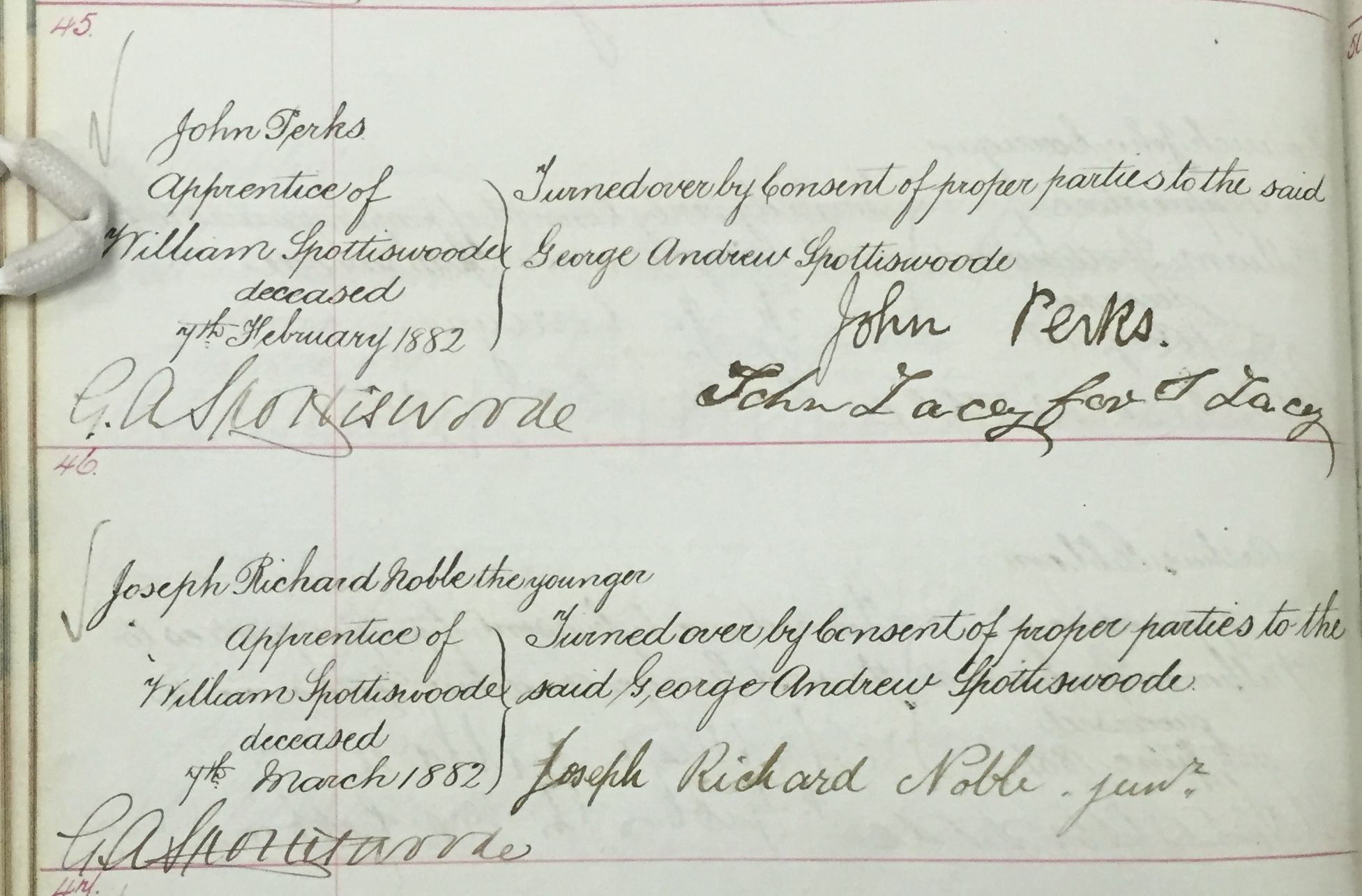
The records of nineteenth-century membership of the Company were compiled by the ROLLCO project from the archival collections held at Stationers’ Hall. The manuscripts consulted included: TSC/1/C/19/10-15 Apprentice Memorandum Book volumes 10 to 15; and TSC/1/C/14/05 Freemen's Register volume 5.
The Tallow Chandlers' Company
Period covered by the ROLLCO records: 1629-1900
The records of The Tallow Chandlers' Company membership were compiled and provided by Lorraine Green and Sheila Jackson as part of their Tallow Chandlers' Historical Database project. The information gathered by this project is extremely extensive, and its scope extends far beyond that of ROLLCO, comprising as it does full biographical and career details of individual members of the Company. For the ROLLCO database the information extracted was confined to the apprenticeship bindings and freedom admissions of the Tallow Chandlers' membership.
Project Contributors
The Bowyers' Company
- Simon Leach, Researcher and Data Compiler, Chairman of the Muniments Committee
- Dr Cliff Webb, Researcher and Data Compiler

The Clothworkers' Company
- Jessica Collins, Archivist and project consultant
- Emma Bashforth, Data Inputter
- Laurie Lindey, Data Inputter

The Drapers' Company
- Penny Fussell, Archivist
- Emma Bashforth, Data Inputter
- Laurie Lindey, Data Inputter
- Heidi Topman, Data Inputter
- Dr Eleanor Warmington, Data Inputter
- Dr Mark Latham, Data Inputter
The Founders' Company
- Andrew Gillett, former Clerk
- Emma Bashforth, Data Inputter
- Laurie Lindey, Data Inputter
- Dr Eleanor Warmington, Data Inputter

The Girdlers' Company
- Brigadier Ian Rees, Clerk
- Pamela Taylor, Archivist
- Emma Bashforth, Data Inputter
- Dr Eleanor Warmington, Data Inputter
The Goldsmiths' Company
- David Beasley, Librarian
- Dr David Mitchell, Principal Investigator on the 1682 Mark Plate Database project
- Laurie Lindey, Data Inputter

The Mercers' Company
- Jane Ruddell, Archivist
- Emma Bashforth, Data Inputter
- Dr Eleanor Warmington, Data Inputter
- Dr Mark Latham, Data Inputter

The Musicians' Company
- Pastmaster Paul Campion
- Dr Cliff Webb, Researcher and Data Compiler
- Dr Eleanor Warmington, Data Inputter
The Salters' Company
- Katie George, Archivist
- Dr Cliff Webb, Researcher and Data Compiler

The Stationers' Company
- Sue Hurley, Archivist
- Michael L. Turner, London Book Trades project
- Emma Bashforth, Data Inputter
- Dr Eleanor Warmington, Data Inputter

The Tallow Chandlers' Company
- Liveryman Lorraine Green, Researcher and Data Compiler
- Freeman Sheila Jackson, Company Secretary
- Dr Eleanor Warmington, Data Inputter

Centre for Metropolitan History
- Professor Matthew Davies, Project Director
- Dr Mark Merry, Project Manager and Database Developer

Institute of Historical Research
- Seiji Okamoto, UI and Application developer
- Martin Steer, UI and Designer
- Bruce Tate, Database and API developer